Run and Drive and damage: what to check on an auction lot
Run and Drive is a limited check performed at the yard. Learn how to assess damage, airbags, water traces, and vehicle structure before buying.
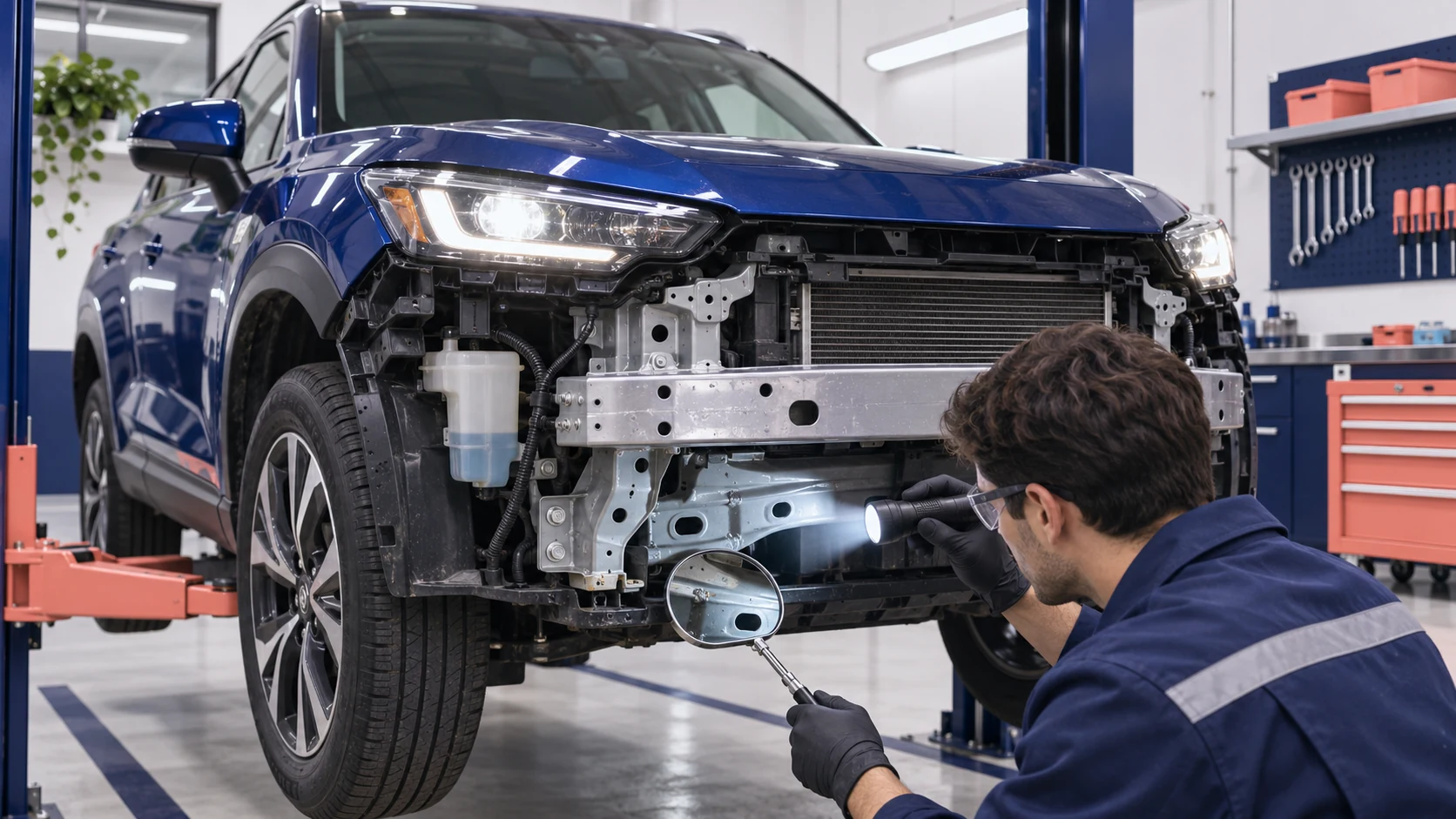
Short answer: Copart's Run and Drive means that when the car arrived at the yard, Copart verified that it started, engaged a gear, and moved forward under its own power. The record does not describe repair quality, roadworthiness, or today's condition. Before deciding, assess damage type, airbags, water traces, body structure, and access to an independent inspection separately.
Before comparing a vehicle in the AAS catalog and sending a vehicle request, prepare a one-page check sheet. Mark each point as confirmed, unknown, or requiring further inspection.
What does Run and Drive mean?
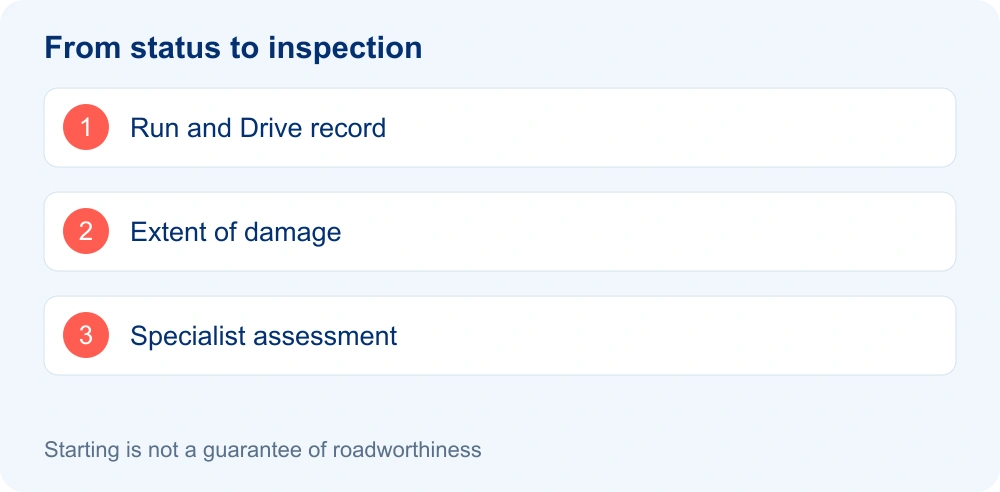
Run and Drive is a record limited by time and condition. Copart's official explanation describes three actions checked at intake: starting the engine, engaging a gear, and moving forward under the vehicle's own power. Timing matters: the car may suffer damage after arrival, its battery may go flat, or another system may stop working.
The status therefore answers a narrow question: what did the vehicle do at intake? It does not answer the questions needed for a repair budget, such as body geometry, complete safety-system condition, cooling-system leaks, or water traces hidden in the interior.
Assess the status and physical damage separately
A damage code describes a known or reported problem, not the whole vehicle. Copart's guide separately mentions primary and secondary damage codes, including frame, mechanical, water, rollover, and undercarriage. These are not interchangeable. Read both fields together with photographs and lot notes; one code does not form a complete picture.
Airbags are a separate safety issue. NHTSA explains that an airbag deploys only once and must be replaced after a collision at an authorized service facility. Deployment depends on impact direction, speed, sensor positions, and the vehicle's design. Do not assess a damaged steering wheel, dashboard, seat, or belt pretensioner from photos alone.
How to check water damage, structure, and safety
NHTSA's flood-damage guide warns that water damage may appear later. It lists damp or moldy smells, mud or water lines inside, and rust unusual for the car's age. Look in the trunk, glove box, beneath the dashboard, along carpet edges, and inside doors. A clean interior cannot rule out flood history.
For structure, request underbody photos and views of pillars, sills, and the trunk floor. Watch for uneven gaps, folded metal, fresh welding, and sharp paint-color changes. These signs are not a diagnosis but justify further examination. Decide on severe damage with a specialist who can see the car or a complete inspection report.
An illustrative Tbilisi family scenario
Imagine a family in Tbilisi seeking a midsize SUV and seeing Run and Drive on a lot. This is an illustration, not an AAS customer case. They need restored safety systems, an appropriate child-seat position, and predictable repairs for daily use. The key question is not simply whether the car moves, but whether the damage is confined to areas whose repair can be controlled technically and documented.
If the steering-wheel and side airbags are deployed and a frame-damage code appears, Run and Drive does not make the lot low risk. If water traces are visible, a hybrid's or EV's high-voltage components also need separate assessment. A family may stop considering the car even with a running engine when safety and structural evidence is insufficient.
A practical lot inspection checklist
| Issue | What to examine | Decision rule |
|---|---|---|
| Run and Drive | When and how it was recorded | Treat it as a past check, not a guarantee |
| Damage | Primary/secondary codes, underbody, pillars | One photo or code is insufficient |
| Safety | Airbags, pretensioners, sensors, dashboard lights | Request specialist diagnostics |
| Water | Smells, mud, water lines, rust, electrics | Keep possible hidden damage in mind |
| Structure | Body symmetry, welds, floor, suspension | Risk remains unknown without geometry checks |
For separate documentary checks, see the VIN-history article. Run and Drive and VIN history are different sources and cannot be merged into one general claim of “good condition.”
Run and Drive, Engine Start, and a non-running lot
For Run and Drive, Copart checks starting, engaging a gear, and forward movement. Engine Start is narrower and concerns starting and idling. A lot that cannot move under its own power does not establish those capabilities. This comparison explains auction labels only; none replaces checks for body, safety, or water damage.
Between similarly priced lots, prefer more complete evidence: both damage codes, clear photos, a document, key information, and an available inspection route. A status word cannot make the choice on its own.
What Run and Drive and photos cannot establish
Run and Drive cannot establish road safety, correct body geometry, or hidden engine, transmission, and electrical conditions. Photos cannot exclude hidden water damage. NHTSA's safety material describes airbag inflation taking less than 1/20 of a second and frontal deployment typically relating to an impact equivalent to 8–14 mph, although response depends on crash conditions. Those figures explain safety context; they do not measure a lot's condition.
The Georgian Service Agency lists make, model, VIN, year, and fuel type among registration data. This is an administrative record, not certification of repair quality. After import, registration, customs procedures, and acceptance of a repaired car should remain separate.
If photos are incomplete, record the unseen areas and request more material or an independent inspection. Incomplete photos are insufficient grounds to regard a lot as safe.
Related reading
- VIN history, title status, and mileage: a separate documentary check.
- Copart or IAAI: choosing by the specific lot.
- Buy Now or auction bidding: comparing buying methods and limits.
This article was prepared with AI assistance; its sources and text were checked through an editorial review process.
Next steps
Related articles

Buy Now or auction bidding: how to buy a car
Buy Now offers a quicker decision; bidding puts you in a competitive process. Choose by the lot’s documents, risks, and your written spending limit.
Read article
How to choose a car import company
Compare written quotes, cost boundaries, payment documents, progress reporting, and vehicle handover terms when choosing an importer.
Read article
Copart or IAAI: which auction should you choose?
Compare Copart and IAAI by the specific lot: buyer eligibility, documents, fees, transport, and the total cost of bringing a vehicle to Georgia.
Read article