Shipping a car from the USA to Poti
Vehicle transport from the USA to Poti is a chain of handovers. This guide explains documents, quote boundaries, terminal procedures, and managing delays.
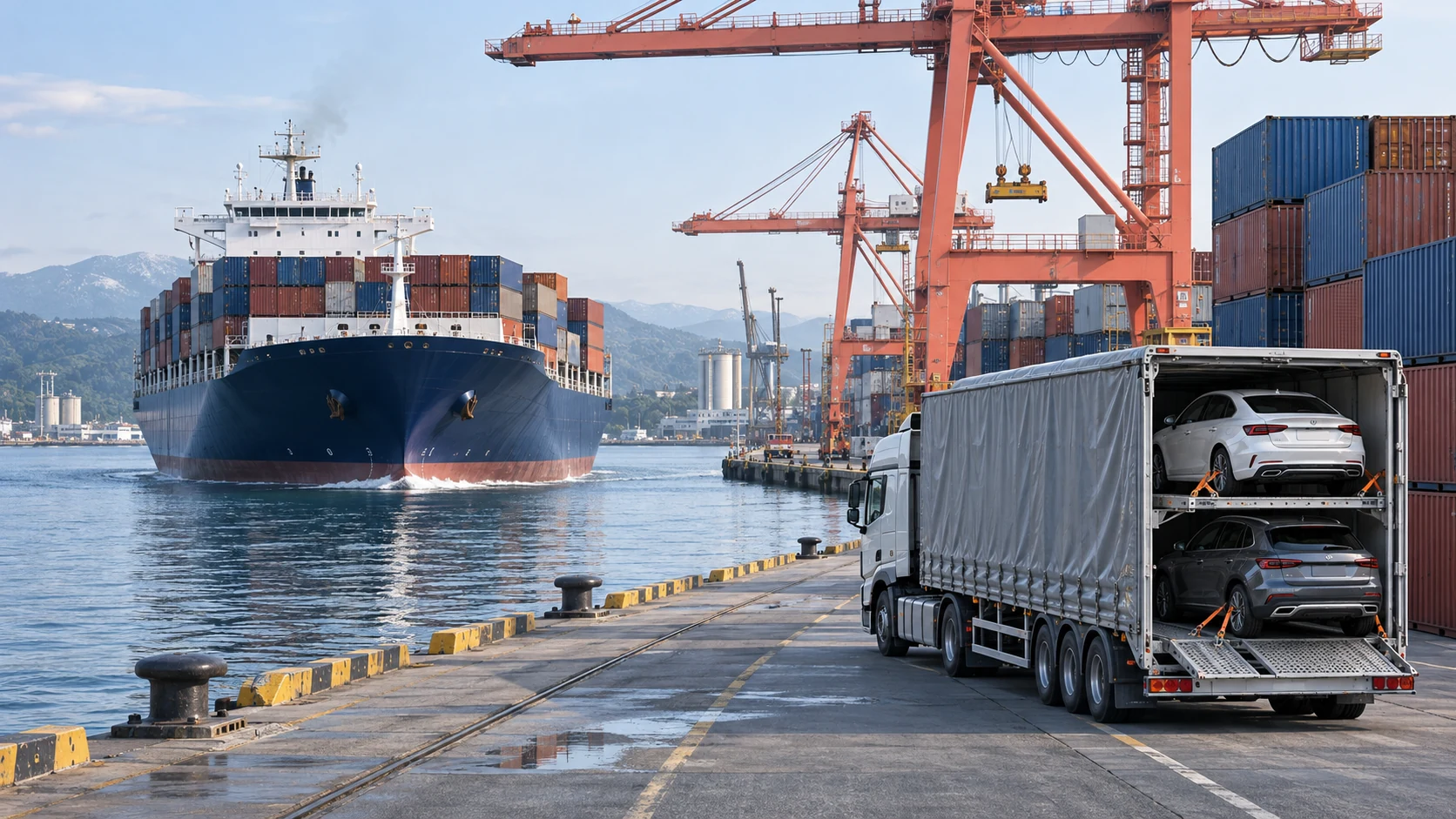
Short answer: Car transport from the USA to Poti cannot be explained by one promise. The journey runs from the lot to an inland carrier, through US export paperwork, sea shipping, receipt at Poti's terminal, and customs or onward delivery in Georgia. Every handover needs a responsible party, a document, and confirmation of the next step. Request an exact service scope, exclusions, and a delay-notification procedure in the quote. Do not treat a calendar deadline or final price as guaranteed in advance.
The approach: A shipping plan identifies each handover, its document, the responsible party, and the condition that allows the next stage to begin.
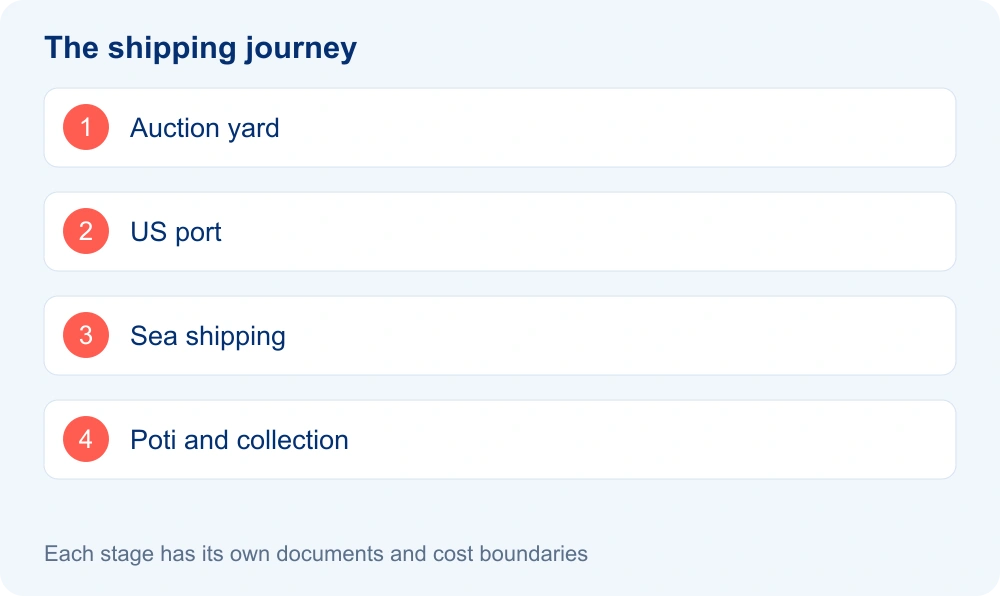
How the USA-to-Poti journey is divided
Buyers often see only the starting port and Poti, while the stages between disappear into the word “transport.” In practice, the chain is:
- Lot to inland carrier: The party responsible for removing the vehicle collects it. Check the lot number, condition, and loading capability.
- Inland route to US port: The carrier hands the car to the port or export operator. Title or ownership-document mismatches can cause substantial delays here.
- Port to shipping line: A transport document is prepared identifying the cargo, sender, receiver, and route. Keep a copy of what was passed to the next party.
- Poti terminal to Georgia: Opening a container, removing the vehicle, customs procedures, and onward transport are separate steps.
Use the AAS calculator to plan the transport portion from the USA to Poti. It does not calculate customs or the final complete budget. Find vehicles and lot details in the AAS catalog. Neither page replaces confirmation by the carrier, terminal, or customs authority.
Which document applies at each stage?
Under the applicable US export rule, VIN and ownership information for used vehicles exported by air or sea must be submitted at least 72 hours before export. This concerns US export documentation; it does not determine sailing time, release from the Poti terminal, or Georgian customs processing time.
Retain the ownership document, invoice, VIN, inland and sea transport documents, and terminal notice separately. Compare the VIN and receiver across the records.
The Georgian National Tourism Administration's official page notes customs offices at Poti and directs cargo importers to check procedures with the Revenue Service. This does not confirm release or completed clearance for a particular car.
What should a shipping quote include?
One price or the phrase “USA to Poti” does not explain what is included. Request a written table with each item explained:
| Item | Question for the quote | Confirmation |
|---|---|---|
| Inland transport | From which lot to which port? | Receiver and handover status |
| Export documents | Who gathers the title, VIN, and export record? | Document copy and responsible person |
| Sea leg | What are the route, cargo unit, and exclusions? | Transport document number |
| Poti terminal | Who manages opening, storage, and collection timing? | Terminal or agent notice |
| Insurance | Which risks are covered and excluded? | Policy or written conditions |
Handover card: At every stage record who hands over, who receives, which document is transferred, and what event enables the next step.
How carrier and terminal responsibilities differ
The carrier manages movement and its documentary trail. The terminal manages services at the particular port under the contract, including removal from containers, storage, and weighing. APM Terminals Poti lists these services, but the list does not confirm release of a specific shipment.
An APM notice from 2026 says vehicle release is permitted from 6 a.m. on the day following container opening. Confirm the time with your forwarder. Record the terminal rule in the quote, not only an estimated arrival date.
When delays arise and how to describe them
Delays can result from mismatched documents, a late inland carrier, port schedules, container opening, or additional customs checks. Different parties manage each cause, so “delayed” is not a sufficient status.
Request four details: last location, latest document, next responsible party, and the new condition to be met. If told “in transit,” ask about the next event and its evidence.
For an initial check of border crossing and import status in Georgia, use RS Cargo/Vehicle Search. It offers search by VIN, container number, receiver surname, shipment number, or vessel name. Compare the result with your documents: it does not establish terminal release, completed customs clearance, or technical condition.
Insurance and liability boundaries
Read insurance in relation to when risk passes between parties. Ask where cover begins, what counts as damage, which exclusions apply, and how quickly an incident must be reported. Keep photos, video, and handover reports with transport documents.
If terms were given verbally, request them in writing. In the AAS vehicle request form, include the VIN, lot, and documents you know about so further discussion uses the same facts. Submitting a form does not replace an insurance policy or a terminal decision.
The limits of a transport plan
A plan cannot control vessel schedules, overseas port operations, additional customs requirements, or document-authenticity decisions. Nor should it promise a fixed arrival day, final cost, or absence of damage without supporting current documents and coverage conditions.
A useful quote identifies uncertainty. Record confirmed facts, assumptions, and conditions requiring a new notification.
Four status fields: Last location, latest document, next responsible party, and the condition enabling the next step. If one is missing, the status is incomplete.
Checklist before arrival in Poti
- You have consistent copies of the lot, VIN, and ownership document.
- You know who handles US export documents and delivers the car to port.
- Transport document data matches your records.
- You know in writing whether opening, storage, weighing, and collection are included.
- Insurance coverage and exclusions are documented; a verbal promise is insufficient.
- You confirm release timing with the forwarder and compare status with RS search.
If a leg remains unclear, request the next action and its supporting document.
Frequently asked questions
How many days will delivery to Poti take?
Do not treat a fixed date as guaranteed in advance. Ask which stages are confirmed, which schedules the route depends on, and how changes will be communicated.
What should the transport price cover?
Request separate items for inland transport, export documents, sea shipping, terminal services, storage, insurance, and possible extras. Assess a specific amount only from a written quote.
How can I check whether the car has entered Georgia?
Try the VIN, container or shipment number, or vessel name in RS Cargo/Vehicle Search and compare the result with the carrier's document. It is an initial border-crossing and import-status check, not confirmation of terminal release, completed clearance, or registration.
Related reading
This article was prepared with AI assistance; its sources and text were checked through an editorial review process.
Next steps
Related articles

Buy Now or auction bidding: how to buy a car
Buy Now offers a quicker decision; bidding puts you in a competitive process. Choose by the lot’s documents, risks, and your written spending limit.
Read article
How to choose a car import company
Compare written quotes, cost boundaries, payment documents, progress reporting, and vehicle handover terms when choosing an importer.
Read article
Copart or IAAI: which auction should you choose?
Compare Copart and IAAI by the specific lot: buyer eligibility, documents, fees, transport, and the total cost of bringing a vehicle to Georgia.
Read article