Hybrid or electric: choosing a car to import from the USA
Choosing a hybrid or EV starts with your usage, VIN, model year, connector, and a realistic charging plan in Georgia.
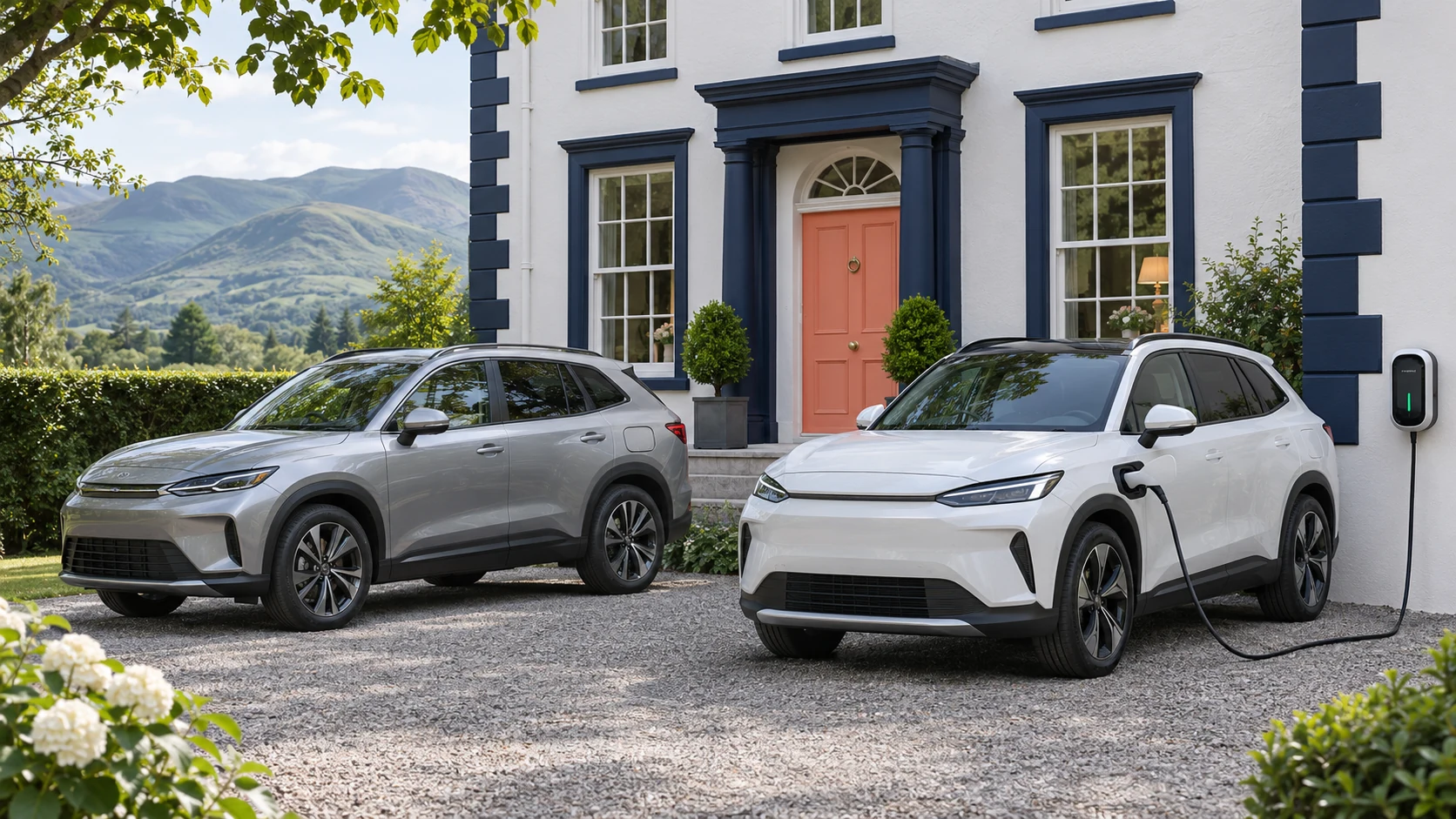
Short answer: A hybrid combines a combustion engine and electric motor, while a fully electric car depends on a charged battery for driving. When importing from the USA, do not choose on economy alone. Check the exact year, VIN, trim, charging port, battery condition, and where you can charge in Georgia.
What are hybrids and electric vehicles?
A conventional hybrid uses a combustion engine and a small battery and generally does not need a separate charging cable. A battery electric vehicle has no combustion engine, making charging infrastructure part of everyday use. A plug-in hybrid sits between them: it has both an engine and external charging capability. The word “hybrid” in a listing is therefore not enough.
Base the choice on your use in Georgia. Without charging at home or work, a conventional hybrid depends less on public chargers. With reliable home charging and a well-understood daily route, an EV can be a manageable choice. This is a decision rule, not a promise about a particular car's outcome.
Hybrid or EV: a family comparison
| Criterion | Hybrid | Electric vehicle |
|---|---|---|
| Energy source | Fuel and an electrical system | A charged high-voltage battery |
| Daily habit | Refueling and regular servicing | Planning home or public charging |
| Key import check | Hybrid battery, engine, and transmission | Battery, charging port, and compatible charger |
| Lot risk | Water or collision damage may affect both systems | Water or impacts may affect high-voltage components |
Add your family's real conditions: passenger count, overnight parking, journeys outside the city, and safe cable storage. Set out the final requirements in the AAS vehicle request form and check separate transport-cost variables in the calculator.
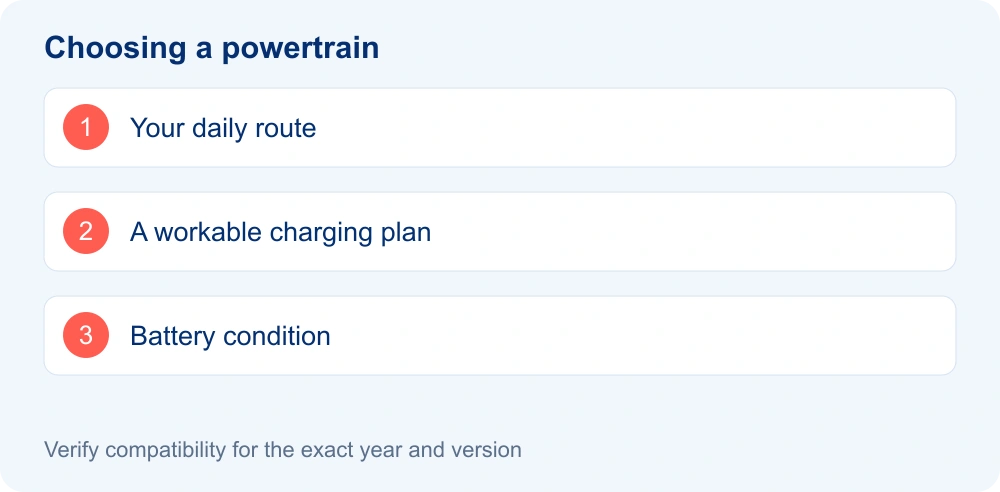
Why verify the VIN, year, and connector?
Different years and trims of one model may have different ports, charging power, or software functions. The US Department of Energy's Alternative Fuels Data Center explains that AC Level 1 and Level 2 use J1772, while J3400-equipped vehicles use J3400 across charging levels. It lists CCS, CHAdeMO, and J3400 for DC fast charging. The same page describes 120 V Level 1, 240 V Level 2, and DC chargers that may reach 500 kW. This is a US classification, not a guarantee that a US car will work with every Georgian station.
The matching manufacturer's document is decisive. On Hyundai's official Manuals & Warranties portal, find resources for the VIN and read the relevant year's port and charging instructions. The portal alone does not establish charging rules for a specific IONIQ 5. Select the correct manual by VIN, verify a port photo, then compare the car with local chargers.
How to plan charging in Georgia
EV Power and martEV illustrate that connectors differ. EV Power Georgia describes selecting stations, checking availability, navigation, and charging history through its app. martEV's technical page lists Type 2, CCS2, and GB/T, with CHAdeMO also specified for a DC model. A network appearing on a map does not mean your car can connect to all its ports.
Before buying, record the exact year and VIN, request a charging-port photo, and inspect station information for the cities and routes you use regularly. Check connector type, AC/DC modes, current operating status, and how charging is started in the app. Availability and terms change; an old screenshot is not sufficient evidence.
Which scenario suits which buyer?
A Tbilisi apartment resident unable to install parking-area power who often travels to the regions may prefer a conventional hybrid. This is an illustrative scenario, not an AAS customer result. A family with safe home charging and a stable daily route can more readily meet an EV's requirements. A plug-in hybrid may suit a buyer seeking electric driving for short city trips while retaining fuel flexibility for longer journeys.
The answer is not simply “more modern” or “cheaper.” It must fit charging access, routes, battery-inspection options, and the connector used in Georgia. If any of these four is unknown, list it as a requirement to verify rather than a final specification.
What cannot be promised in advance?
Do not assume a universal adapter exists. Physical shape, communication protocol, voltage, speed, and vehicle software restrictions must all be compatible. The manufacturer's manual, station operator's information, and a photo of the exact port are more useful than a general model description.
Charging checks cannot replace damage checks. After water exposure or a severe impact, assess high-voltage risks separately. Nor should you assume a particular import automatically receives tax relief or savings. Check current rules, vehicle data, and customs calculations separately. The Georgian Service Agency includes fuel type in registration information, so record it accurately.
Four steps before bidding
- Record your usage: city, regional travel, parking, and passengers.
- Verify powertrain, port, and trim from the VIN, year, and manufacturer's manual.
- Check suitable connectors and current status at stations along your Georgian routes.
- For damaged lots, request separate battery, charging-system, and water-trace checks.
The result should be a short written specification for comparing lots. State “hybrid” or “electric,” year, acceptable port, place of use, and unacceptable risks.
Frequently asked questions
How do I verify battery and charger compatibility?
Use the VIN and year to obtain the correct manual, a port photo, and a battery-condition assessment. Compare the car's AC/DC capabilities with the chargers you will use.
Will every public charger in Georgia fit my car?
No. The vehicle port, connector, charging mode, and network specifications must match. The different connectors shown by EV Power and martEV demonstrate why this check matters.
Related reading
- The complete USA vehicle import budget, broken down by variables.
- Customs clearance in Georgia, separating tax and registration.
- USA-to-Poti transport, route and document stages.
This article was prepared with AI assistance; its sources and text were checked through an editorial review process.
Next steps
Related articles

Buy Now or auction bidding: how to buy a car
Buy Now offers a quicker decision; bidding puts you in a competitive process. Choose by the lot’s documents, risks, and your written spending limit.
Read article
How to choose a car import company
Compare written quotes, cost boundaries, payment documents, progress reporting, and vehicle handover terms when choosing an importer.
Read article
Copart or IAAI: which auction should you choose?
Compare Copart and IAAI by the specific lot: buyer eligibility, documents, fees, transport, and the total cost of bringing a vehicle to Georgia.
Read article